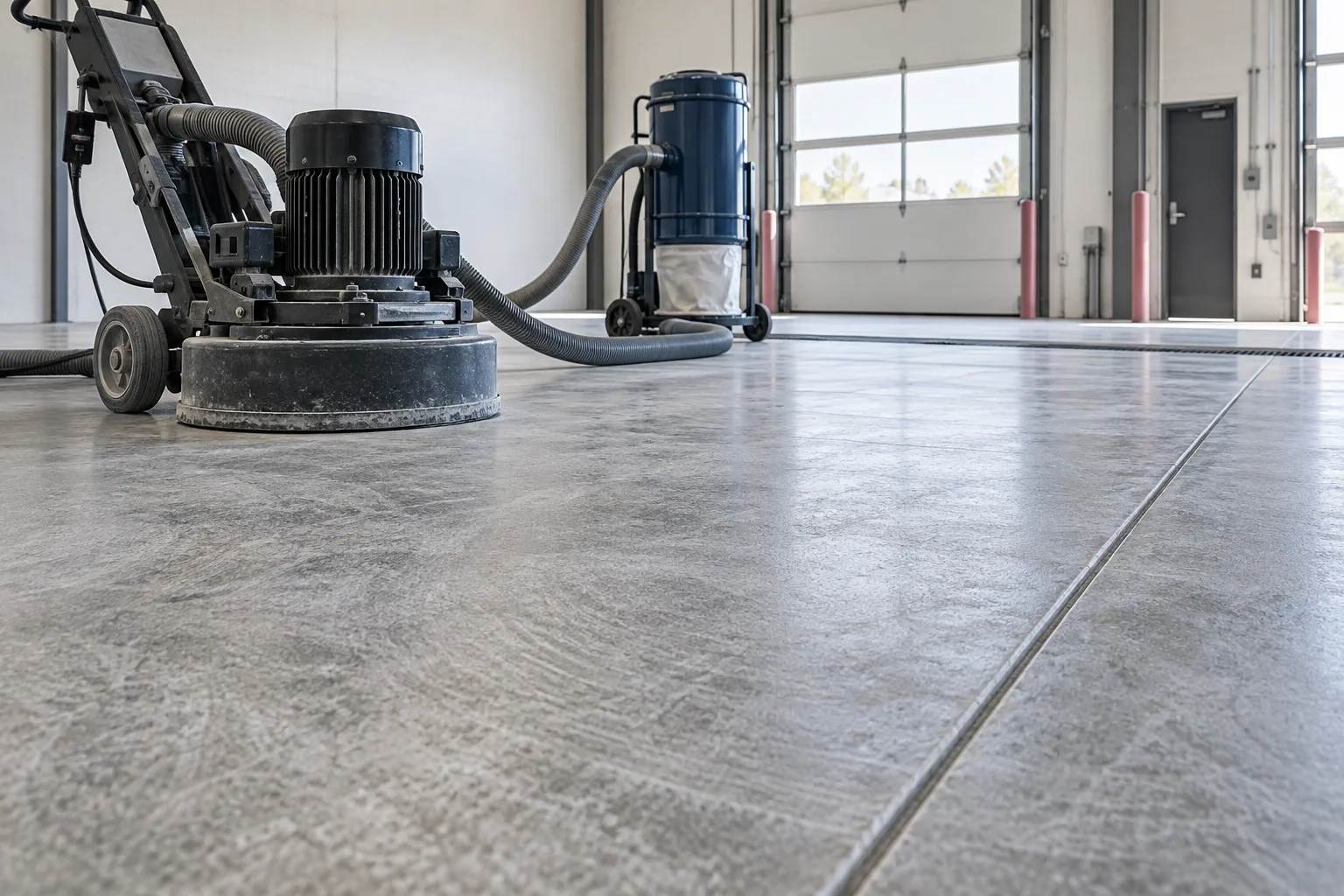
 01
01Commercial flooring budget planning
How to Build a Commercial Flooring Budget That Holds Up
A useful budget separates the visible finish from the site conditions and coordination work that make the finished floor possible.
Read guide ↗
North Indianapolis commercial flooring
Independent project-planning guidance for teams who need the floor, the schedule, and the building to work together.
Start a project brief ↗Carmel · Fishers · Westfield
Noblesville · Zionsville
A better first conversation
Share use, traffic, access, timeline, and what the finished floor needs to handle.
Separate visible material choices from preparation, transitions, phasing, and return-to-service needs.
Use a clear brief to make contractor conversations and proposal comparisons more useful.
Coordinate the work around occupants, other trades, maintenance, and the date the space reopens.

The material is only part of the answer
Traffic, cleaning, acoustics, rolling loads, moisture, transitions, and future repairs all shape the right commercial floor system. A good scope makes those conditions visible early.
Planning guides
01Commercial flooring budget planning
A useful budget separates the visible finish from the site conditions and coordination work that make the finished floor possible.
Read guide ↗02Commercial LVT versus carpet tile
Choose around traffic, acoustics, cleaning, future repair, and transitions—not whichever sample looks best under showroom lights.
Read guide ↗ 03
03Medical office flooring
A practical guide to cleanability, staff workflow, transitions, phased work, and the people who must sign off before installation.
Read guide ↗04Tenant improvement flooring
A clearer sequence for landlords, tenants, designers, and GCs coordinating a commercial finish package.
Read guide ↗Start with what you know
Share the project basics. The project brief is designed to make your next contractor conversation clearer, not to collect sensitive details.
Answers before the next step
It is an independent commercial flooring project-planning resource for Carmel, Fishers, Westfield, Noblesville, Zionsville, and north Indianapolis. It helps teams organize scope questions before contractor conversations; it does not claim to be an installer.
Start with the space type, approximate size, existing floor, desired timing, access limits, priority areas, traffic or cleaning conditions, material direction, and the work that may need field verification. Photos and plans help make those facts easier to discuss.
Ask before final scope or material commitments when substrate, removal, moisture, transitions, access, phasing, or return-to-service conditions could change the work. A site visit cannot be replaced by a general web guide.
No. It does not publish unverified pricing, availability, installer recommendations, project outcomes, or credentials. Use the guides to ask clearer questions of appropriately qualified providers.